


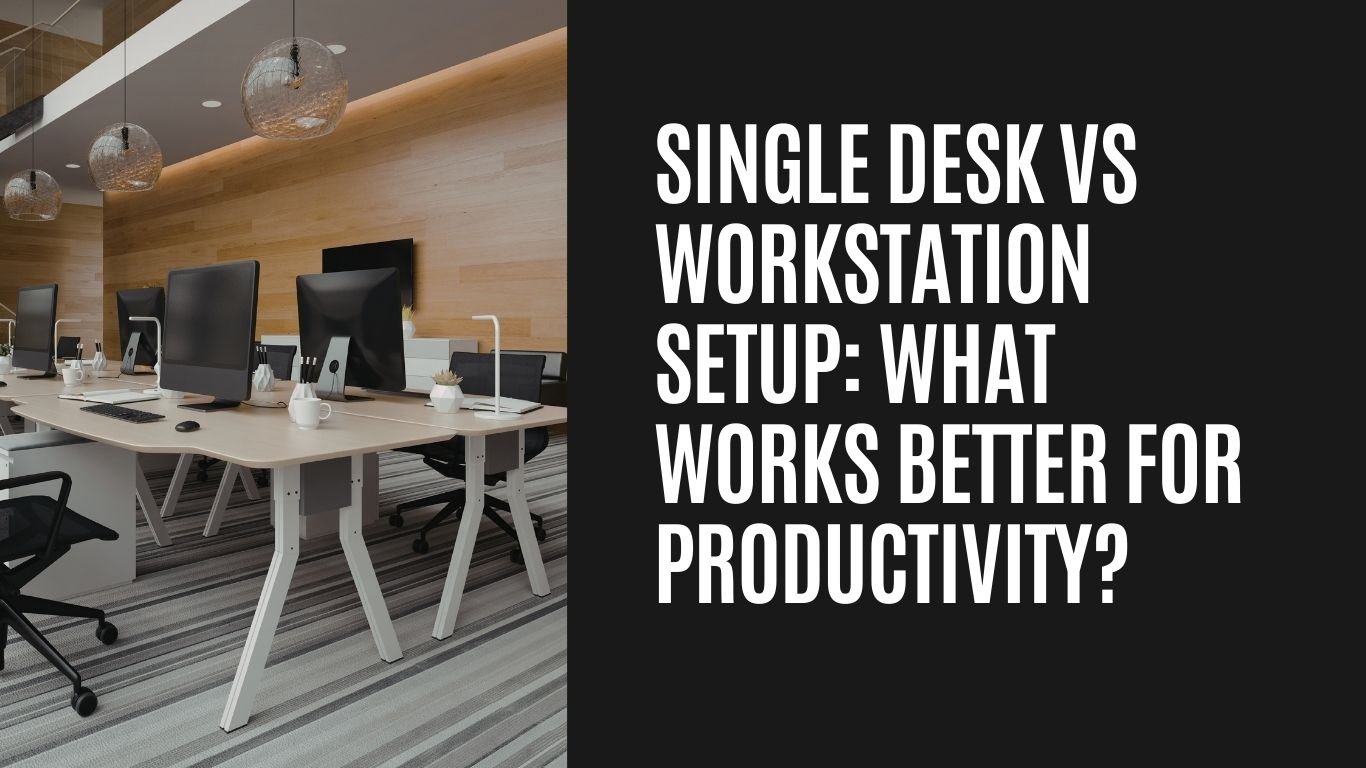
Single Desk vs Workstation Setup: What Works Better for Productivity?
People like to debate desk setups as if one option is objectively better. It isn’t. A desk setup only works if it matches the way you actually spend your workday. The problem is that most people design their setup based on how they want to work, not how they really do.
A single desk looks clean and simple. A workstation looks serious and professional. But neither guarantees better output.
Living With a Single Desk Setup
A single desk setup is usually just a desk, a chair, and a laptop. Sometimes there’s an extra monitor, sometimes not. It’s popular because it’s simple.
Why People Like Single Desk Setups
- Requires less space
- Lower budget
- Easy to move or rearrange
- Good for flexible work
For light work writing, studying, planning, emails—this setup feels fine. Fewer tools can even improve focus in short sessions.
Where Single Desks Start to Fail
The problem begins when people stretch this setup beyond its limits.
Long hours on a laptop slowly affect posture. You lean forward, your neck drops, wrists adjust awkwardly. It feels normal at first. Over time, discomfort builds.
Most people don’t notice the damage early because it’s gradual.
What Changes With a Workstation Setup
A workstation exists for one reason: consistency.
Same place.
Same posture.
Same tools.
Every day.
This consistency reduces both mental and physical friction.
Benefits of a Workstation
- Multiple screens reduce window switching
- External keyboard and mouse improve arm posture
- Proper chair supports long hours
- Screen height protects neck and eyes
Workstations are not about showing off. They are about reducing daily resistance.
When Workstations Become Overkill
If your work is simple or irregular, half the setup goes unused. Then it becomes clutter instead of support.
Buying a workstation before your work requires it is a common mistake.
Productivity Loss Is Subtle
You rarely notice productivity loss immediately. You notice it later as fatigue.
Constant tab switching, resizing windows, adjusting posture, and refocusing eyes adds friction. Each action is small. Together, they drain energy.
A workstation removes some of this friction.
A single desk adds to it when work becomes complex.
Neither setup creates discipline. They only change how much resistance you deal with every day.
Ergonomics: Where Most People Lie to Themselves
Laptop-only setups are fine for short sessions. They are not designed for daily long-term work.
Neck strain.
Wrist discomfort.
Lower back pain.
They don’t appear suddenly. They creep in.
A workstation allows:
- Better screen height
- Better seating position
- Better arm alignment
This is not about comfort. It’s about avoiding problems that slow you down later.
Ignoring ergonomics because “it’s working for now” usually backfires.
Space and Budget Still Matter
Not everyone has space for a dedicated workstation.
Not everyone should invest heavily early.
Single desks survive because they adapt to real life.
Workstations demand space and commitment.
Neither choice is wrong if it matches reality.
The worst choice is forcing a setup that doesn’t fit your life.
What Most People Actually End Up Using
Very few people stay at extremes.
They start with:
- A single desk
Then add:- One monitor
- A keyboard
- A better chair
Over time, the setup evolves based on real pain points, not trends.
This gradual approach works because it responds to actual needs.
So Which One Is Better?
There is no universal answer.
Single Desk Works Best When
- Work is light
- Work is flexible
- Work is temporary
Workstation Works Best When
- Work is complex
- Work is repetitive
- Work is long-term
If your setup feels limiting, it probably is.
If it feels fine, stop overthinking it.
FAQs
Can I work full time on a single desk?
Yes, but most people eventually feel physical strain unless they make ergonomic changes.
Is a workstation only for designers or developers?
No. Any job with long screen time benefits from proper posture and layout.
When should I upgrade my setup?
When discomfort or workflow frustration becomes frequent, not occasional.
Is a hybrid setup a compromise?
It is usually the most practical solution for most people.
What is the biggest mistake people make?
Choosing based on looks instead of how they actually work day to day.
Final Thought
A desk setup will not fix bad habits.
But the wrong setup will quietly make good work harder.
Choose based on reality, not aspiration.









Recent Comments